

RENAL PATHOPHYSIOLOGY LABORATORY NEWS
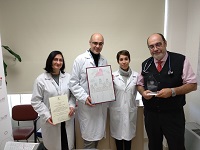
THE MARAÑÓN RENAL PATHOPHYSIOLOGY LABORATORY HAS RECEIVED THE UCM'S 4TH TECHNOLOGY AND KNOWLEDGE TRANSFER AWARD
18 January 2019
On 18 January, the Complutense University of Madrid (UCM) once again held its traditional ceremony for the presentation of the awards corresponding to the 4th Technology and Knowledge Transfer Award.
The main objectives of this initiative include promoting knowledge transfer as a key factor in achieving more advanced economies and societies, as well as contributing to social, cultural and economic development and increasing the visibility of researchers' work.
In this edition, the award in the Health Biomedical Sciences category, in the “Introduction to Transfer” category, went to the team of Alberto Tejedor and Alberto Lázaro, members of the IiSGM Renal Pathophysiology Laboratory.
This award recognises the work that the team has carried out in recent years with cilastatin. The results of the study have generated great interest in the scientific community because of the molecule's usefulness in protecting the kidney against the toxicity of certain medicines.
MARAÑÓN AWARDED BY ALCER FOR FINDING THE FIRST MEDICINE THAT PROTECTS THE KIDNEY
30 October 2017
The researchers at Hospital Gregorio Marañón who discovered a molecule that protects the kidney against the toxicity of other medicines have been awarded by ALCER, the federation of associations for kidney patients. The award was presented in the “Prevention of chronic kidney disease” category. The molecule cilastatin protects against kidney damage caused by medicines for cancer and HIV, as well as powerful antibiotics.
The National Federation of Associations for the Fight against Kidney Diseases (ALCER) has awarded the team of researchers at Hospital Gregorio Marañón who discovered a molecule that protects the kidney against the toxicity of other medicines. The award was presented during the 30th National Conference of People with Kidney Disease. ALCER works to improve the quality of life of people with chronic kidney disease in all respects, promoting the prevention and research of chronic kidney disease, as well as raising awareness of organ donation for transplantation.
Full article (30/10/2017)
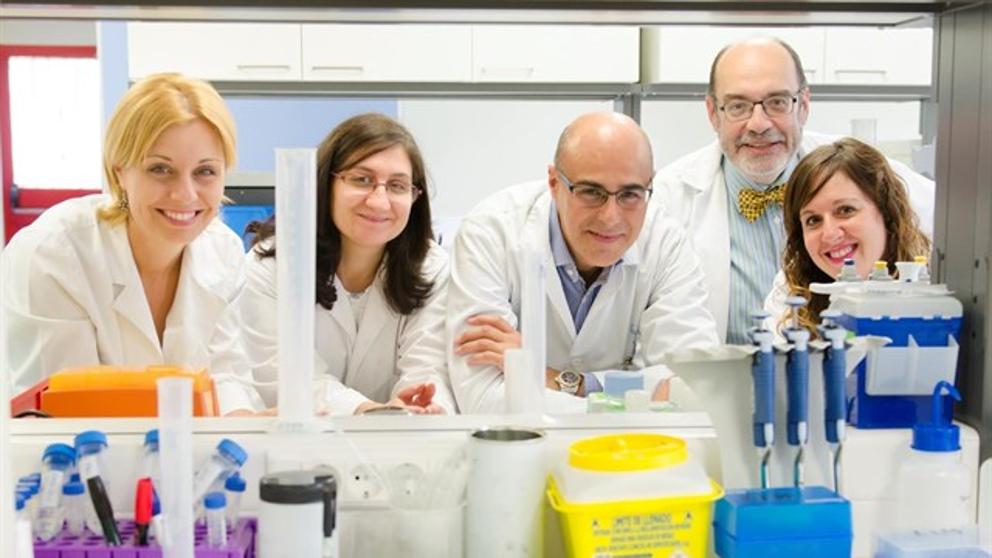
GREGORIO MARAÑÓN DISCOVERS THE FIRST MEDICINE THAT ACTS AS A KIDNEY PROTECTOR
2 August 2017
Researchers at Hospital Gregorio Marañón have discovered a molecule that acts as a protector for the kidney against the toxicity of other medicines. The centre has patented this molecule, which will become the first nephroprotective agent to have been developed and could help prevent acute kidney failure in patients, more than 40% of which is caused by the side effects of medical and pharmacological treatments.
The Nephrology Department at Hospital Gregorio Marañón and the team of researchers from the Pathophysiology Laboratory have shown that cilastatin protects the kidney in more than 80% of cases against the toxicity of medicines widely used in the treatment of certain cancers, transplants or infections. (Watch video)
The kidneys filter around 200 litres of blood a day to produce up to two litres of urine. This process eliminates waste products from the body (urea, uric acid, creatinine, potassium and phosphorus) through a complex system that includes filtration, reabsorption and excretion mechanisms. When the kidney fails, in what is known as ‘acute kidney failure’, the ability to eliminate these waste products is lost, which can cause chronic disease or even death.
Acute kidney failure is recurrent and complicated because it can occur as a side effect not only of chronic conditions, mainly diabetes, but also as a result of pharmacological and medical treatments that used to be considered safe. In fact, more than 40% of acute kidney failure is associated with damage caused by the side effects of pharmacological or medical treatments.
Full article (2/08/2017) // RTVE // Agencia EFE // La Razón // Muy interesante // Cadena Ser // Abc // Agencia SINC // ISCIIII // Madri+d // Infosalus // Mundo Sanitario // MadridContigo (YouTube)