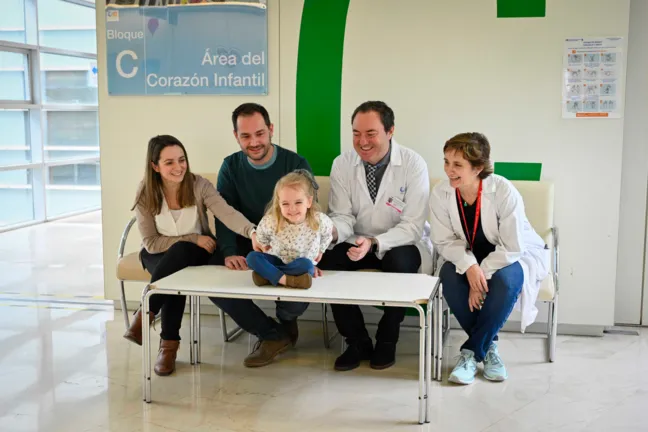

The IiSGM completes the world's first clinical trial with thyTreg cells in pediatric heart transplantation
A pioneering strategy that opens a new avenue for preventing rejection, developed by the hospital’s Immunoregulation Laboratory and Pediatric Cardiology Department.
The Laboratorio de Inmunorregulación del Instituto de Investigación Sanitaria Gregorio Marañón (IiSGM) and the Servicio de Cardiología Pediátrica del Hospital Materno Infantil Gregorio Marañón have completed the world’s first clinical trial using thymic regulatory T cells (thyTreg) in children undergoing a heart transplant. The research, initiated in 2019, evaluates an innovative strategy that could transform the management of immune rejection in paediatric transplantation.
Preliminary results show that a single administration of this cell therapy, carried out a few days after transplantation, makes it possible to maintain a greater reserve of regulatory T cells for months, helping to promote immunological tolerance of the new organ. None of the treated patients who have already completed two years of follow-up has shown signs of rejection.
Although the researchers stress that the absence of rejection cannot yet be attributed exclusively to this therapy, the data indicate that boosting regulatory T cells helps to reduce the risk of acute rejection precisely during the most critical stage after transplantation.
A pioneering therapy based on the patient’s own thymus
The trial evaluates a strategy based on regulatory T cells, a type of cell that is essential for maintaining the balance of the immune system and preventing uncontrolled immune responses. Their discovery was recognised with the 2025 Nobel Prize in Medicine.
The study’s main innovation lies in the origin of these cells. For the first time, the researchers have used thymic tissue, usually removed during paediatric heart surgery and previously discarded, as a source for obtaining highly stable Treg cells with regulatory capacity. These cells, known as thyTreg, are isolated, processed and subsequently administered to the same patient to enhance their natural ability to accept the transplanted organ.
The preliminary results of this phase I/IIa clinical trial confirm both the technical feasibility of the procedure and its safety profile. To date, ten children under two years of age have received the therapy, and six of them have already completed two years of clinical follow-up after transplantation.
During the first six months following surgery, the period of greatest risk of acute rejection, the treated patients maintained significantly higher levels of Treg cells in their blood than those who did not receive this therapy. In some cases, these levels remained even above pre-transplant values for two years.
In addition, none of the patients developed donor-specific antibodies, one of the main triggers of immune rejection.
Towards a reduction in immunosuppression
Rejection remains the main challenge in organ transplantation. Although immunosuppressive treatments have decisively increased the survival of transplanted organs, their prolonged use can cause significant side effects, particularly in children.
In this context, Treg cell therapies represent one of the most promising areas of precision medicine applied to transplantation. However, previous trials conducted with cells obtained from peripheral blood had shown limited efficacy and presented significant difficulties in paediatric patients due to the large volume of blood required.
The use of cells originating from the thymus could overcome these limitations and offer a more powerful and specific tool for inducing immunological tolerance. Following these initial results, the team led by Rafael Correa, director of the Laboratorio de Inmunorregulación del IiSGM, together with doctors Manuela Camino and Nuria Gil and specialists from Cirugía Cardíaca Infantil, is already preparing new clinical trials.
The aim will be to assess whether additional doses of thyTreg can not only maintain protection against rejection, but also progressively reduce the need for immunosuppressants without compromising the patient’s immunological stability and while maintaining their ability to accept the transplanted organ without rejecting it.
At the same time, the group has made progress in developing strategies using allogeneic thyTreg cells, which could extend this therapy to adult patients and children for whom thymic tissue is not available.
The significance of these results has already attracted the interest of international institutions and scientific societies, including Harvard University, Massachusetts General Hospital, la Sociedad Española de Trasplante and la Sociedad Española de Cardiología Pediátrica y Cardiopatías Congénitas, which have invited the research team to present these findings at congresses and scientific meetings held in recent weeks.