

HEALTHCARE INNOVATION EXAMPLES
'Sea Hero Quest', a tool to help diagnose conditions related to cognitive abilities
As well as training the player's abilities, 'Sea Hero Quest' offers specialists a tool to study and diagnose Alzheimer's disease and other types of dementia, most of them degenerative. Although it looks like an ordinary video game, with different scenarios in which players must dodge traps, shoot or simply flee from sea monsters, the software is in fact a complete test capable of measuring the player's mental abilities.
SynCardia Freedom Portable Driver, a replacement backpack for patients awaiting transplants
This is what Stan Larkin lived through for 17 months: he was able to replace the organ with a backpack created by the University of Michigan and connected to his cardiovascular system.
The patient was diagnosed with cardiomyopathy, a degenerative failure that gradually and irreversibly reduces the heart's capacity until a tragic end arrives, unless the miracle of a transplant takes place. The situation Stan managed to survive shows how, in the future, hundreds of lives awaiting vital organs, or simply solutions like this one, could be saved or at least prolonged.
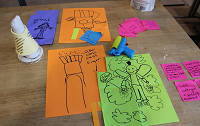
"Superhero Cyborgs", an initiative in which a group of children design their own 3D-printed prostheses and become "superheroes"
"Superhero Cyborgs" is a workshop run jointly by the non-profit organisation KIDmob and the design software company Autodesk. The online magazine Good reports on this initiative, in which both have provided their tools and facilities so that a group of boys and girls aged 10 to 13 could express their most creative side when shaping their own particular wearables.

DAR WEB: online treatment programme for children with Recurrent Abdominal Pain and their parents
PSiNET (Psychology, Health and the Net) is a research group of the Internet Interdisciplinary Institute of the Universitat Oberta de Catalunya (IN3-UOC) whose main objective is to study the psychological aspects linked to the use of ICT in relation to people's health and quality of life.
The aim of this project is to offer tools that help families cope with the problem and prevent the pain from interfering in the long term. Families can access the programme from anywhere and at any time.

CROWD UC3M: a space to seek funding for R&D&I projects on the Goteo platform
UC3M is launching this first crowdfunding call with the aim of establishing new channels of collaboration, communication, interaction and engagement with society that contribute to social, economic and cultural progress.
These are projects aimed at promoting research, knowledge transfer and innovation, put forward by members of its university community in the various areas of multidisciplinary activity and corporate social responsibility that characterise UC3M, and with a high potential impact on the advancement of society.
MammaPrint: a molecular diagnostic test to avoid unnecessary chemotherapy
An example of a successful technology transfer from a public body (the Netherlands Cancer Institute) to a private company (Agendia). This test makes it possible to predict the recurrence of a tumour and, therefore, to know whether or not chemotherapy needs to be given.
The BBVA Foundation's allergy web portal exceeds one million visits in 2014
In 2014 the BBVA Foundation's allergy portal exceeded one million visits, with almost 2.5 million page views. Its content comes from the BBVA Foundation Book of Allergic Diseases, produced in collaboration with the Foundation of the Spanish Society of Allergology and Clinical Immunology (SEAIC). Since the microsite was launched in 2012, visits have increased by more than 90%.
Neuron Bio obtains a European patent for a new compound against Alzheimer's disease
The European Patent Office (EPO) has granted Neuron Bio the patent "Neuroprotective, hypocholesterolaemic and antiepileptic compound", dated 24 December, to protect its new compound NST0037, the most advanced to date in the Spanish biotech company's Alzheimer's portfolio.
The compound NST0037 was developed by Neuron Bio from its projects searching for neuroprotective statins, which began in January 2007.
Three research projects reach their minimum funding target within a month of launching on PRECIPITA
Three of the twelve projects currently on Precipita, FECYT's scientific crowdfunding platform, have just exceeded their minimum funding target. The projects that have done so are: "Early detection method for HIV in children under 18 months", which has raised €13,224 against a minimum of €12,800; "Detection and monitoring of the most common and harmful brain cancer", which has raised €7,140 of the €6,000 set as its minimum; and "Reducing the damage caused by traumatic brain injuries", which has raised €1,190 of its initial €1,000 funding target.
Using a theremin for medical applications
A 16-year-old has discovered a non-invasive way to measure breathing in hospitals for less than 50 dollars. He uses a theremin to measure the rise and fall of a patient's chest. The theremin is one of the first electronic musical instruments, and the performer has no physical contact with it.
CNIO and Merck sign a licence agreement to develop new cancer drugs
The Spanish National Cancer Research Centre (CNIO) and the German chemical and pharmaceutical company Merck have formed an alliance to collaborate in the development of anti-cancer drugs. This worldwide agreement will support the development and commercialisation of new compounds in the field of oncology.
In university spin-offs, patents play a key role by encouraging technology transfer
So-called spin-offs are usually considered the most complete and effective mechanism for transferring technology from a public body to society. When these companies are set up, public bodies license patents to the researchers named as inventors so that technology-based companies can be created which, if they prosper, will generate quality jobs. In this way, patents fulfil one of their purposes: contributing to economic and social development.
Almirall: first in class
What can a pharmaceutical company based in Spain do to ensure continued growth in its turnover? The answer lies in developing novel products and internationalising the business, so that sales abroad offset losses in the local market. This requires competitive products, preferably innovative or "first in class", and a broad sales network.
A 3D CAST MADE OF PLASTER AND FIBREGLASS, CURRENTLY IN DEVELOPMENT, COULD BE THE ALTERNATIVE TO TRADITIONAL PLASTER CASTS
It is a 3D-printed brace that follows the contour of the arm. The injured limb is scanned to determine the optimal pattern and structure, with denser material in the area of the fractured bone to provide more support.
Although it is still under development, as work continues to define the optimal material and perfect the scanning, it can be anticipated that it would have many advantages: lightweight, washable, ventilated and recyclable.
THE JUSTICE LEAGUE FIGHTS ALONGSIDE CHILDREN TO BEAT CANCER
A hospital in Brazil has reached an agreement with Warner, owner of the image rights to many superheroes, to redecorate the children's wing with Justice League themes for chemotherapy sessions, telling the children that the bottles contain a "superformula" to make them stronger.
The Pal-joc is an IV pole that doubles as a toy
It allows children to play while they receive their medication. It was created by Sant Joan de Déu Hospital in collaboration with the Escola de Disseny Llotja, the engineering firm IDOM and the Spanish toy safety agency AIJU. This play pole, which children can ride like a scooter, was the idea of Guillermo Puche, head of the outpatient department.

ICU without walls
Henares University Hospital is using the first 'Guardian' system in Spain. It is a computerised monitoring system that detects changes in the vital signs of patients admitted to the different hospital wards, thus avoiding their admission to the Intensive Care Unit.

Hepaplan, software for precision surgery on liver tumours
allows surgeons to perform virtual liver resections and plan a more precise tumour operation that preserves the function of the organ, avoiding liver failure. It was developed by LabHuman-I3BH at the Universitat Politècnica de València and the La Fe Health Research Institute.